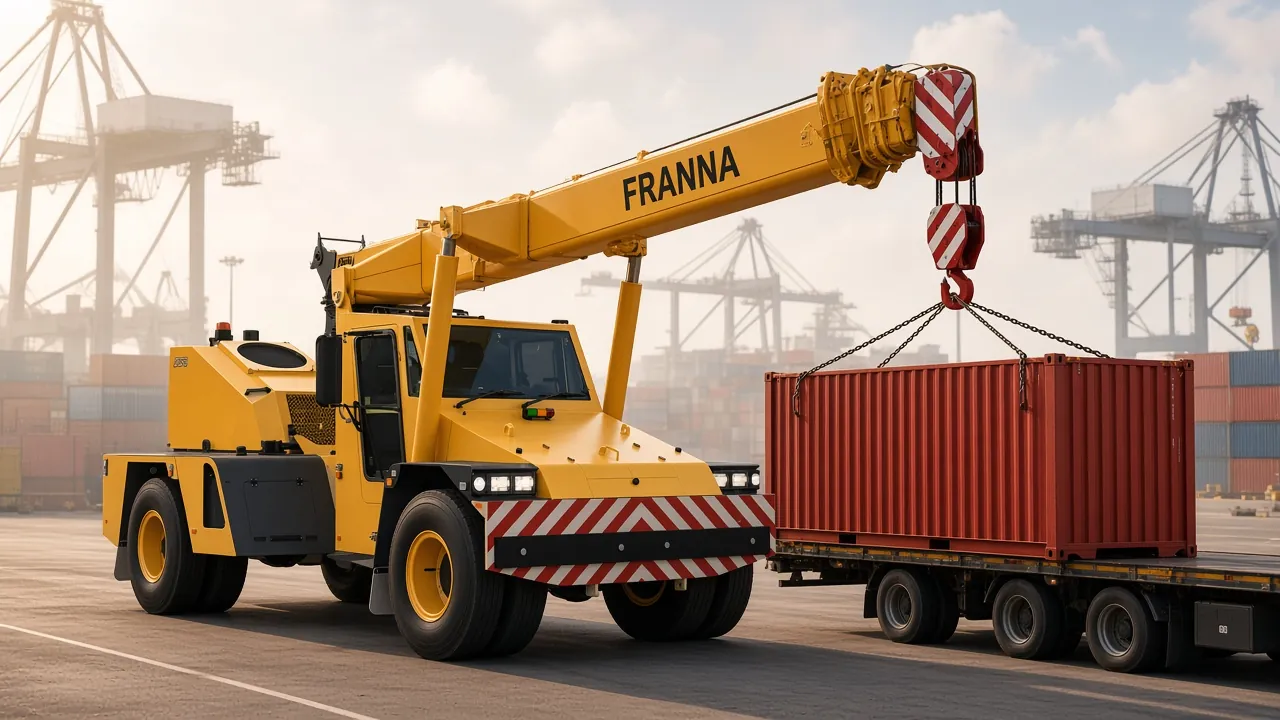
Tilt-tray trucks can drop a container on flat ground near the road. Anything beyond that, such as over a fence, behind a house, onto footings, into a tight spot or on top of another container, is a crane job.
Container jobs we plan
- Backyard and acreage storage containers
- Containers onto footings or piers
- Stacking containers for storage or workshops
- Modified containers: offices, pop-up shops and studios
- Container moves within depots and yards
Typical weights
Empty containers are lighter than people expect, but they are not light. Check the tare weight on the doors. As a general guide, a standard 20 foot container is often around 2.2 to 2.5 tonnes empty and a 40 foot container around 3.7 to 4.2 tonnes. Modified containers with fit-outs can weigh much more.
Before the lift
- Prepare a level base, ideally footings or blocks under each corner.
- Empty the container if possible.
- Clear the route and the set-down area.
- Check council rules for containers on residential land.
Container types and how they lift
- Standard 10, 20 and 40 foot containers: lifted from the four top corner castings, usually with a four-leg chain set and a spreader.
- High cube containers: taller than standard, so boom height and clearances need a little more room.
- Refrigerated containers: heavier than standard because of the insulation and refrigeration unit, which also shifts the centre of gravity toward one end.
- Open-top and flat-rack containers: different structures, often used for machinery. Lifting points and weights must be checked.
- Modified containers: offices, kitchens, bathrooms, studios and granny flats. Fit-outs add weight and can change the balance. Ask the builder for the finished weight.
Footings and bases
A container is designed to bear its weight on its corner castings. The best base is a level footing at each corner: concrete pads, concrete blocks, treated timber sleepers on a compacted base, or steel piers. Additional supports along the length can help for longer containers or soft ground. Raising the container slightly helps drainage and slows corrosion.
Getting the container past the house
On residential blocks the challenge is usually getting the container behind the house. Options include:
- carrying it down a wide driveway on a pick-and-carry crane, where the surface and slope allow
- lifting it over the house or fence from the street, which needs height and reach
- placing it at the front and accepting a different location
The right option depends on the crane class, the distance and the obstacles.
Containers on farms and acreage
On rural properties, containers are often used as sheds, storage or workshops. Long gravel driveways and soft paddocks can be an issue for heavy cranes, especially after rain. Choose a set-down point on firm ground close to a solid track where possible.
Council and planning
Some councils treat a permanently placed container as a structure, which may need approval, particularly on residential land or if it is modified. Check with your council before placing a container long term.
Moving a container later
If you move house or change your layout, a container can be lifted and relocated. Empty it first, and check the corner castings for corrosion.
Questions Brisbane customers ask
Can you put a container over my fence?
Often, yes, depending on the reach and the container weight.
Can you stack two containers?
Yes, using the corner castings and twist locks or other fixings.
Do I need council approval?
Rules vary between councils and depend on what the container is for. Check before placing a permanent container.
Can a crane put a container on a slope?
The container needs a level base. Footings can be built up on a slope, but the crane also needs a stable position.
Can you lift a container with a fit-out?
Yes, if the weight is known and the lifting points are suitable. Ask the builder for the finished weight.
Are containers heavy on lawns?
The container itself spreads its load through the corners. The crane is the bigger concern on soft ground.
Nearby and related
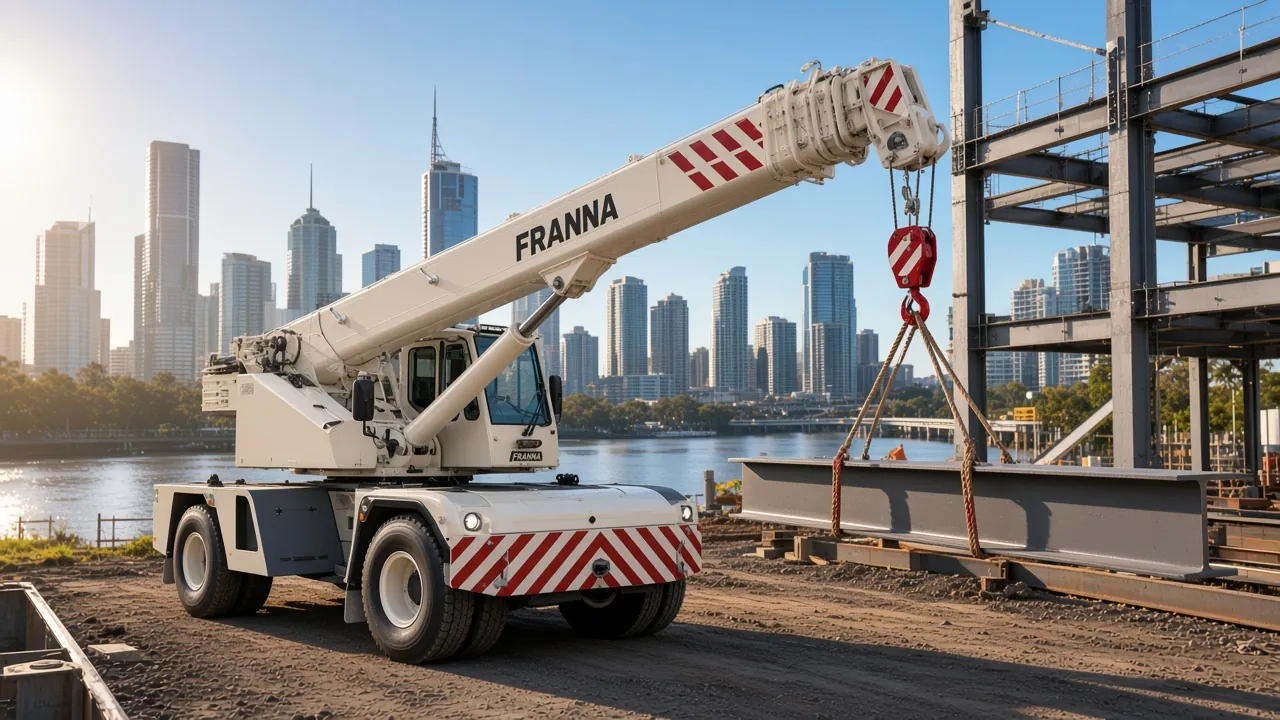 Steel Erection Crane HireBeams for renovations, shed frames, warehouse steel and awnings.Read more
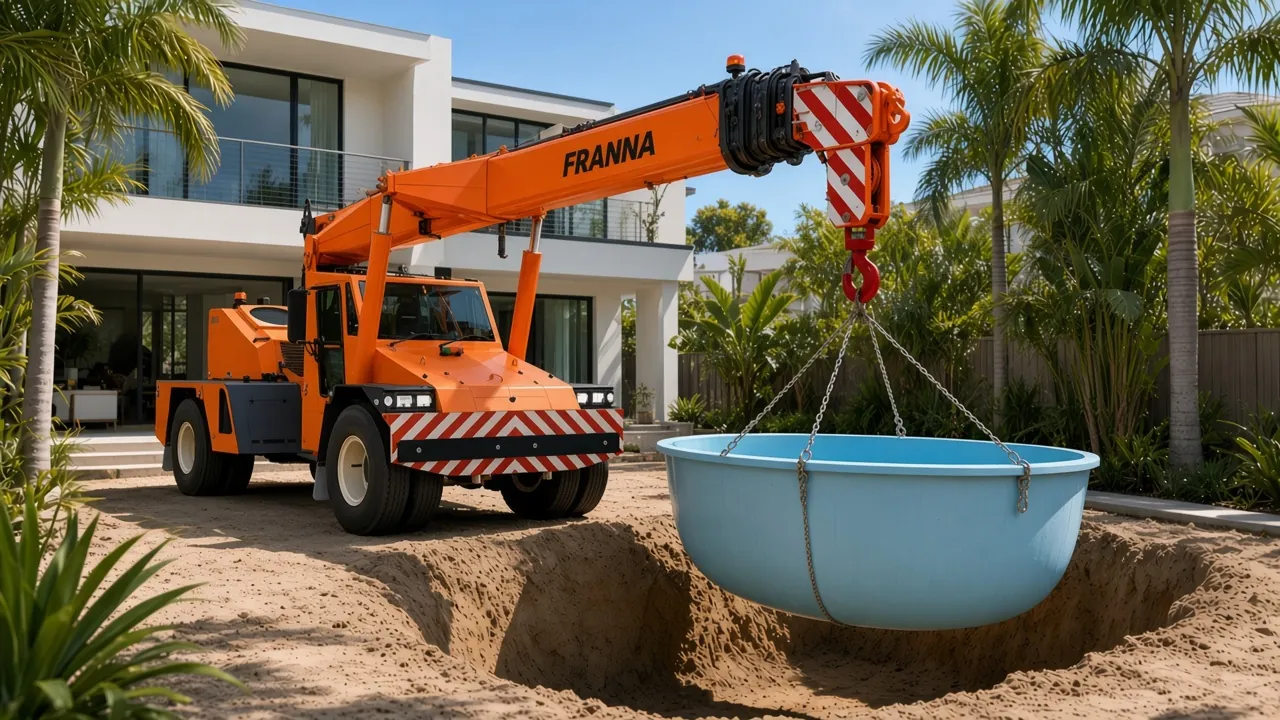 Pool and Spa LiftsFibreglass pool shells and spa baths into backyards, over or beside the house.Read more
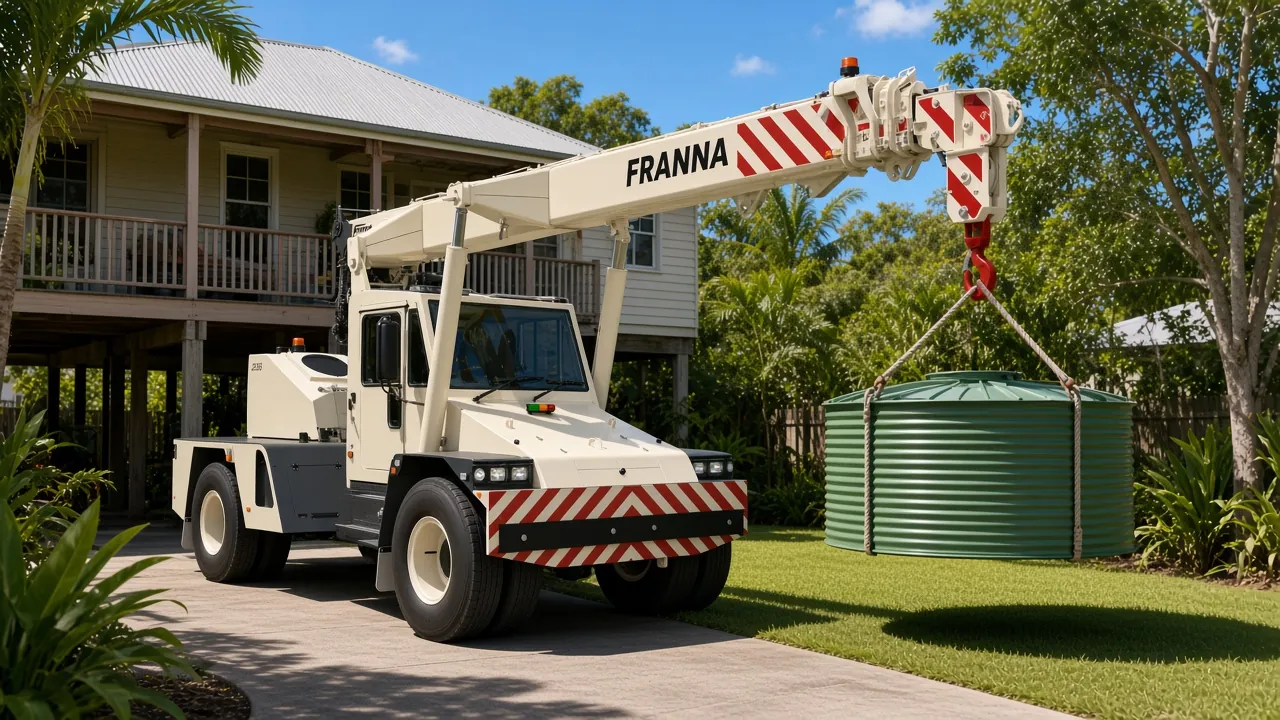 Water Tank LiftsPoly and steel tanks placed on pads and stands, over fences and beside houses.Read more
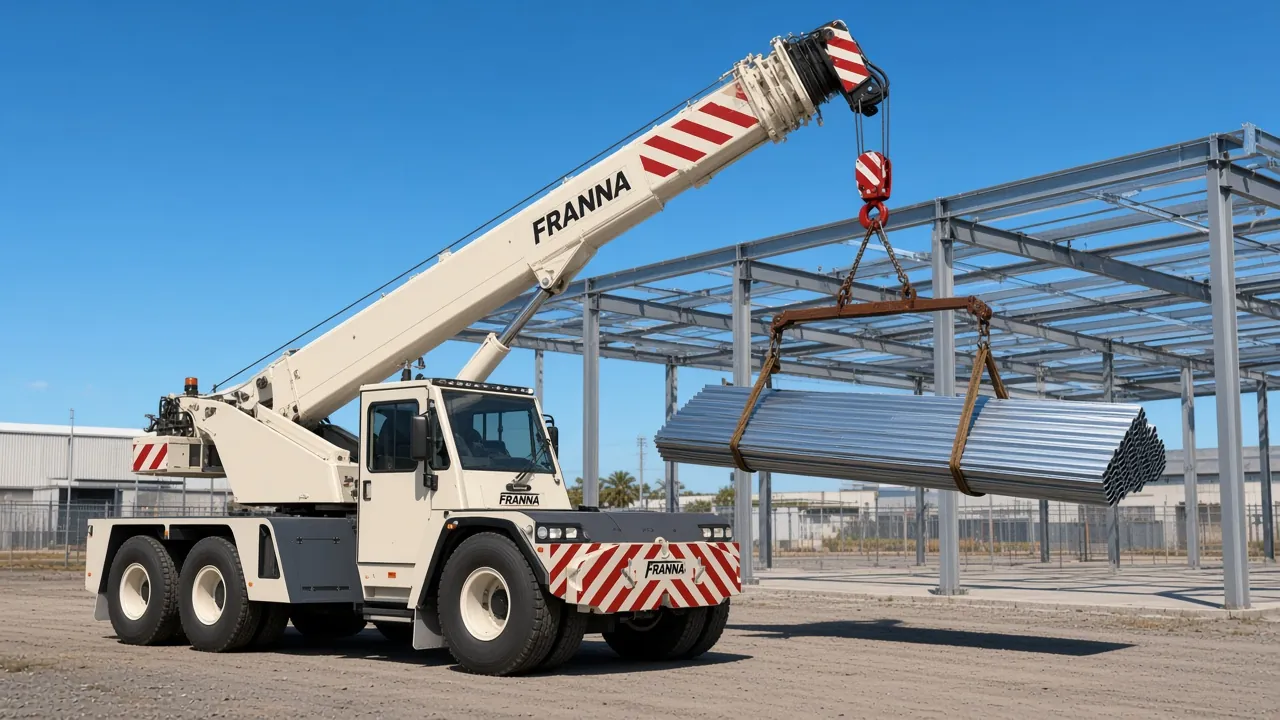 Roofing and Materials LiftsRoofing sheet packs, trusses and building materials to roofs and upper floors.Read more
Where is the lift and what is it?
Tell us the suburb, what needs lifting and roughly how heavy it is. Add photos of the site entry and where the crane would park, and we will come back with a clear written quote.
- Licensed and insured crane operators
- After-hours and weekend lifts available
- Brisbane, Gold Coast and Sunshine Coast
- No obligation – you approve before anything is booked
Prefer email? info@brisbanefrannacranehire.com.au
Request Received
Thanks ! Someone from Brisbane Franna Crane Hire will call you back shortly. For emergencies right now, please call us directly.
Call 07 3106 1834